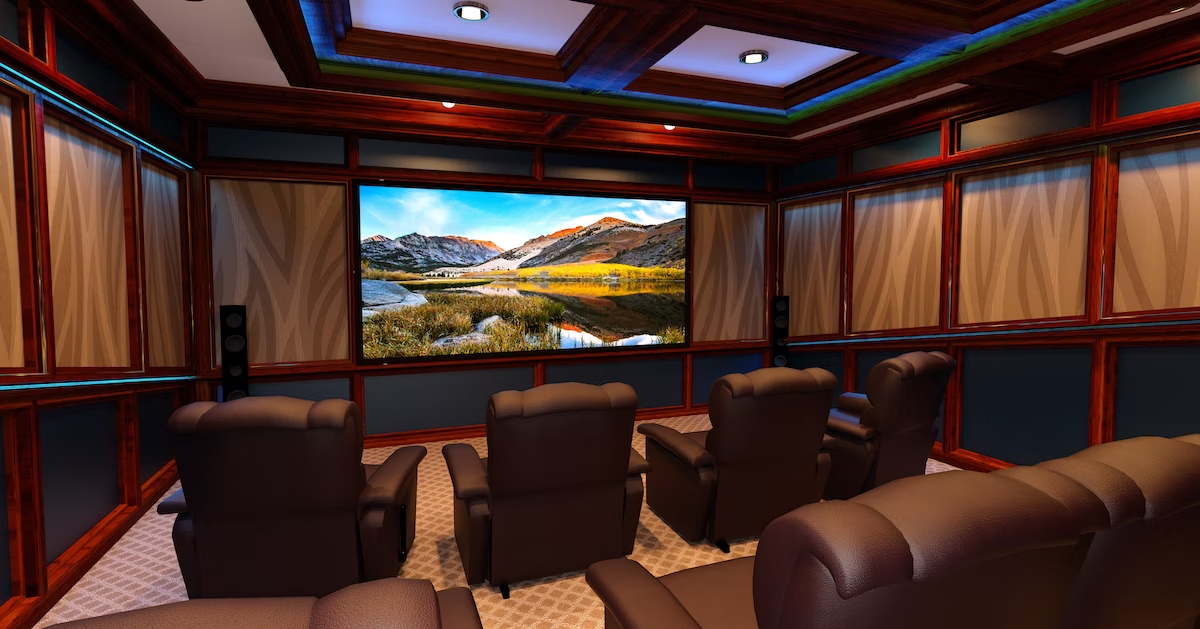
A home theater can be an incredible investment in your family’s bonding time and the primary hangout spot for your circle of friends. It’s a luxury your whole family will enjoy as you watch movies, cheer on your favorite team together, or even host an epic video game tournament.
If you’re thinking about a new home theater, you may wonder what features you’ll want to include and how to best design your space for maximum entertainment value. We’d love to help get your dreams off the ground.
A home theater is generally a dedicated room used for watching movies on a large screen that utilizes surround sound.
The primary purpose is usually to provide a movie-theater experience at home. But this space can also be used for sporting events, playing video games, and playing music.
Sometimes, people also create a home theater in a multi-purpose space that is less formal.
The basics that every home theater should include:
Where you go from there is up to you as you think about how to make a movie theater at home. Whether you just want to turn your living room into a part-time theater or you want a fully-immersive luxury theater room with all the latest features, we’ve got theater ideas to inspire you.
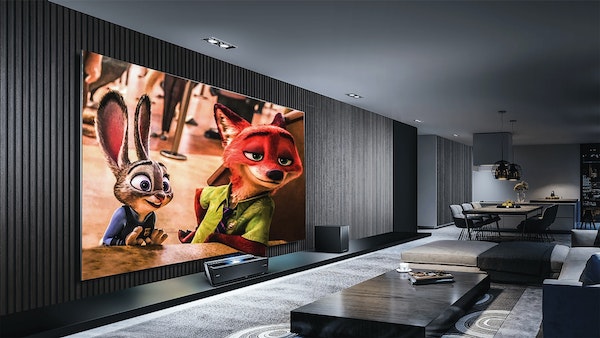
That depends on your particular needs. Some questions to consider as a family before jumping into specific home theater ideas:
Will you want to watch sports, movies, play video games, do all of these things, host dance parties, or use the room for something else?
Will you only want to include your household or do you want this to be the primary gathering place for your extended family, neighbors, and friends? What is the maximum number of people you’d like to host in this space?
We suggest considering a room size of at least 15 ft by 20 ft if you want to have enough space for extra family and friends for an immersive theater experience.
Will you want to cuddle with your spouse and/or kids on couches? Will the younger kids likely sit on the floor? Or will you want home movie theater seats that recline for a more luxurious experience?
A very immersive experience
A multi-purpose combining some home theater elements with
First let’s look at the design elements you’ll want for your dream home cinema center including home movie theater decor, seating, and lighting ideas. Then we’ll consider the audio/visual equipment you’ll need
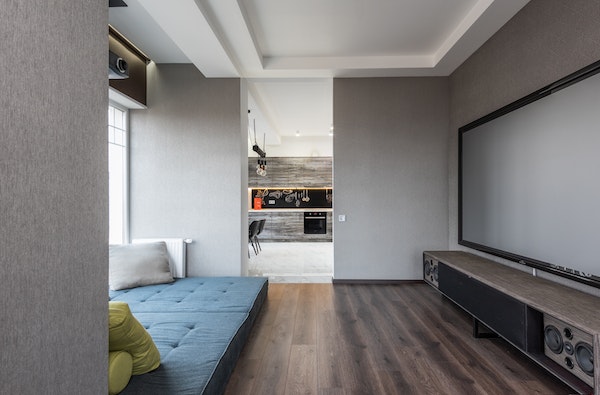
Home theater design involves several crucial elements. Answer these questions and you’ll figure out just the right plan for your home theater.
Before looking at theater ideas, hone your broad vision for your dream theater.
For an indoor home theater, your decor should address aesthetics but also acoustics. Avoid a lot of hard surfaces like wood or tile that reflect sounds and create reverberations. If you have a serious surround sound system, sound-absorbing curtains/wall coverings or acoustic treatments are a fantastic place to start and then build the interior design of your media room’s decor around these elements.
Or, think about hiring an experienced interior designer to help you create the most spectacular space of your dreams.
We have some theme suggestions:
For indoor home theater lighting, the most important thing is to avoid too much natural light to reduce glare. There’s nothing worse than trying to watch a movie but not being able to even see the picture. Either design your room without windows or invest in light-blocking curtains/blinds if you plan to use your room during daylight hours.
Any lighting in your home theater should be soft and subtle to boost the theater atmosphere when needed. But you’ll also want the option to completely illuminate the room for other times, as well.
Floor coverings and floor elevation are your primary considerations for a home theater room floor. There are specialty floor coverings made just for residential theaters you’ll definitely want to check out that help tremendously with your acoustics.
Wall-to-wall carpeting helps absorb sounds to create a better audio experience. Consider short-pile carpeting with a pattern on it to give the movie theater experience. Or use carpet tiles. You can go with residential theater carpet or commercial-grade theater carpet if you want the ultimate in sound control and high-traffic capacity.
And be sure to install the wires before the carpeting so no one trips when walking later.
If you have dust allergies or pets in the home, you may prefer to use washable area rugs, instead, with a hardwood floor.
If you plan to use stadium seating with individual theater recliners or couches, you’ll need to create elevated steps for each level or a sloping floor. This can be done with wooden platforms. Or you can buy home theater seats that come on pre-made risers to create stadium seating without having to affect your floor at all.
Before you choose the perfect home theater seating, think about factors like:
You can choose couches with reclining seats or sectional couches with plenty of space for everyone to put their feet up on portable ottomans.
Or you can go all out with movie theater recliners that have all the luxury features like:
Just keep in mind, if you get the ultimate home theater massaging recliners, get enough for everyone or you can count on the kids, and maybe even some adults, fighting over the best seats.

We encourage you to research the latest home theater systems that will provide the best viewing and listening experience. At the very minimum, you’ll probably want to start with the following basics:
Get a real cinema experience with a huge screen using a projector system with features like these:
For home theater movie screens, you’ve got a wide variety of options for wall-mounted, motorized, tripod, inflatable, or ceiling-mounted screens. And you can choose from a small 75-inch up to 14-ft models depending on your preference and budget.
If you decide to use a large screen TV, think about which of the following features you’ll want:
If you are doing an outdoor theater, you’ll probably only watch movies at night. But if you are creating a space for watching sports events, you may need something that will work in daylight hours, as well. So invest in an outdoor TV that is designed to prevent glare and work in outdoor lighting conditions. You can also invest in glare shields to minimize glare if that is an issue for the placement you prefer for your outdoor TV.
Audio is a key component to having a successful home cinema theater. We suggest one of the following options for the best audio experience:
Today, you have smart systems, Bluetooth, wireless options, systems for small rooms, and systems for large spaces.
An AV receiver amplifies your sound to make it a thoroughly immersive experience like what you can have at a commercial movie theater. Optimize your video and audio signals with Dolby Atmos and DTS:X support.
An HDMI Audio Return channel allows you to simplify your theater system by using a single high-speed HDMI cable to send your TV audio to a receiver. So you only use one cable for audio and visual which reduces clutter and the number of wires you need and gives you great audio and visual.
With all the different electronic devices in your theater system, you will need one universal remote to coordinate everything if you want anyone but an engineer to be able to use all of the equipment.
Some remotes even have mobile remote control apps. Or you can set up Alexa or Google Assistant voice control through Amazon Echo and Google Home smart speakers to make things as easy as possible for the less technically inclined in the family.
While you’re designing your electronics plan, don’t forget the surge protector or, even better, a power conditioner to improve the quality of voltage for your devices for a higher level of protection.
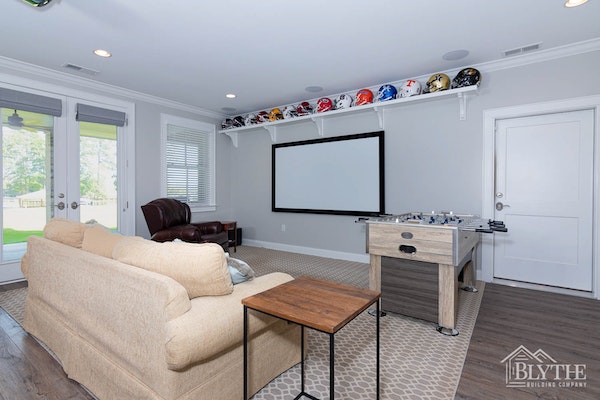
Ideally, you’ll design your home movie theater as you plan your dream home. Then it can fit in with the architecture, interior design, and flow of the rest of your home.
If you are thinking about building a new custom home in South Carolina, we have our own customizable custom home plans and can help you with your home theater plans from the beginning of the home building process. Or, if you want to design your own luxury home or use an architect, we can work with those plans, as well, guiding you through the whole way.
If you’re ready to get started building your dream home in Lexington, SC, or the Greater Columbia, SC area, we can help. At Blythe Building Company, we have built over 100 custom homes in this area and have the experience and attention to detail you are looking for.
Do I Really Need an Outdoor TV to Watch TV Outside?
Make Memories with an Outdoor Fireplace or Fire Pit
Our Favorite Fireplace Ideas and Inspiration
Building a Pet-Friendly Custom Home