There are plenty of notable differences between prefinished and site-finished flooring, which we can review with you to help you make the best decision for your lifestyle and preferences.
The biggest difference between prefinished wood and site-finished wood is that prefinished wood is installed after it has already been sanded, stained, and sealed. Site-finished wood is installed and then sanded, stained, and sealed, allowing for greater customization and a more seamless look. Site-finished wood can be more expensive and take longer to install, but it can also add more value to your new custom build than prefinished flooring.
Visit us online to contact Blythe Custom Homes about building your new house.
What Are the Differences Between Site-Finished and Prefinished Flooring?
There are distinct differences between prefinished and site-finished flooring that make some homeowners lean toward one option over the other.
Appearance
Prefinished flooring is sanded, stained, and sealed all before it is brought to a construction site for installation. This gives it a markedly different initial appearance than site-finished wood, which is natural and unstained at the time of installation.
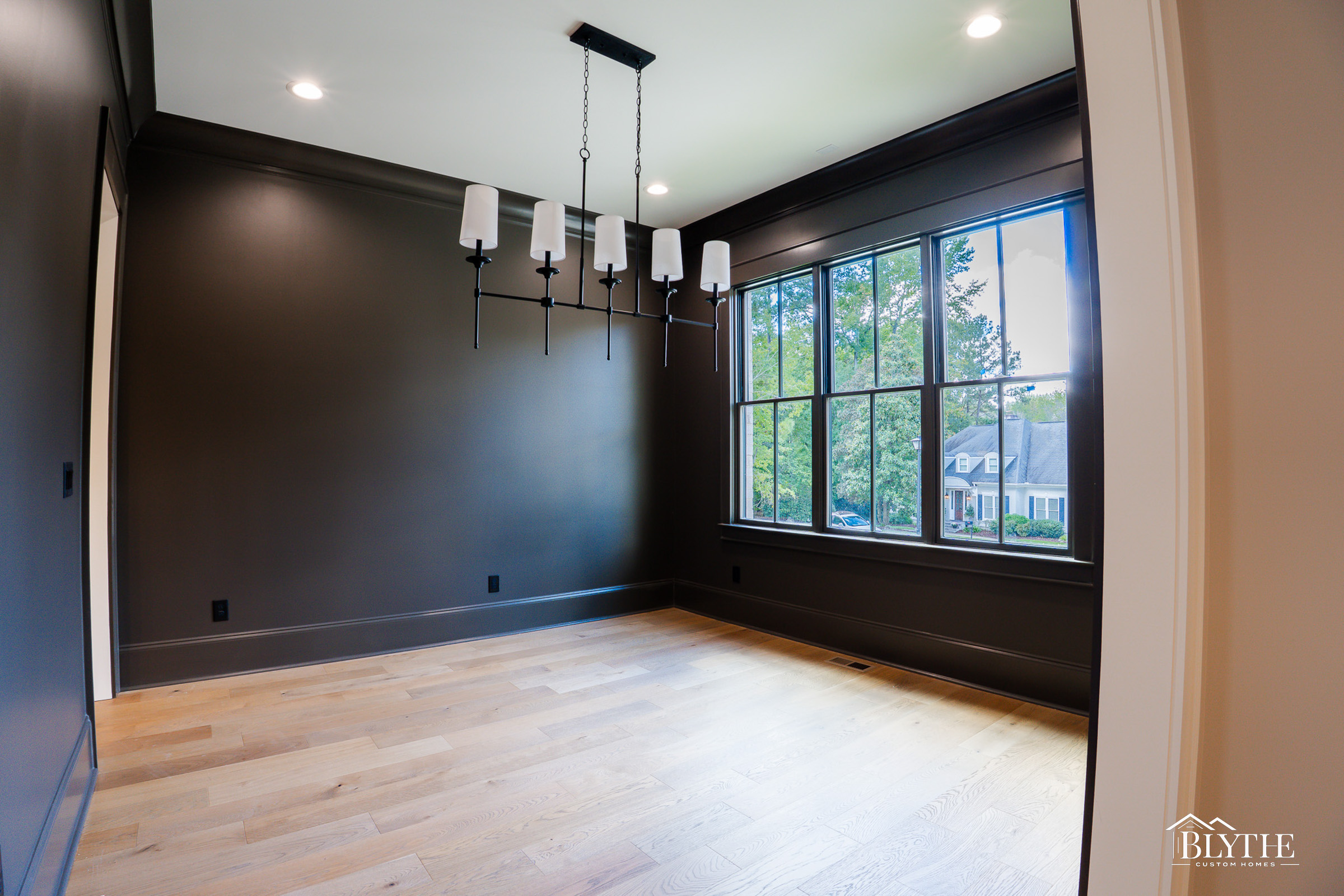
Prefinished flooring generally has visible bevels to help with installation, while site-finished flooring is typically sanded flat.
Applications
Although prefinished wood can be used throughout entire homes, its most useful application may be in basements, mudrooms, and other below-grade spaces that are at risk of flooding or damage. Site-finished wood should be featured in the main living areas to highlight high-quality wood and a rich wood stain that complements the tones throughout the rest of the house.
Time to Install
Another major difference between site-finished and prefinished flooring is the time required to install each type. Prefinished floors take less time to install and can be walked on almost immediately because they don’t need to dry. All in all, prefinished flooring may take several days to install, depending on the square footage.
Site-finished flooring needs to be installed first, then sanded, stained, and sealed, meaning it may be a couple of weeks before the floor can be used.
Skill to Install
Although prefinished flooring might be easier to install, it still requires a good amount of skill to ensure boards line up correctly and there aren’t any noticeable gaps. For seamless installation of prefinished flooring, trust our home builders.
When installing site-finished flooring, builders need even more skill and experience to properly sand, stain, and seal flooring. Mistakes made at any stage of the staining or sealing process for site-finished flooring can be extremely costly.
Durability
In general, prefinished flooring is more durable than site-finished flooring, but not by much. Prefinished flooring is treated in factory settings and can be cured with stronger substances that can’t be used at a residential construction site. Site-finished flooring can still be very durable with the proper installation and maintenance, so don’t let that deter you from choosing this luxury finish.
Cost
All in all, site-finished flooring may eat up more of your budget than prefinished flooring because of the labor, time, and resources required to install it. Prefinished wood may cost more upfront, so the final cost may not be much different.
Ease of Repairs
Site-finished flooring is generally much easier to repair than prefinished flooring. Prefinished flooring can be harder to match than a custom stain, and its beveled edges make it difficult to replace individual boards with damage. Prefinished wood is also harder to refinish than site-finished flooring and requires special materials, equipment, and skill.
Should You Choose Site-Finished vs Prefinished Flooring?
Some homeowners are immediately drawn to the traditional look of site-finished flooring, while others are more focused on durability and choose to install prefinished flooring in custom homes.
When to Choose Prefinished Flooring
Choose prefinished flooring for immediate installation and use in high-traffic areas, with minimal mess. Prefinished flooring is highly durable, making it a good choice for households with kids and pets. While it may cost more per board than unfinished wood, it costs less to install, making it less expensive overall.
You can limit prefinished flooring to specific areas of your house where durability is a top concern, such as the basement or mudroom.
When to Choose Site-Finished Flooring
Choose site-finished flooring if you want a fully custom look, have the space in your budget, and do not need to move in as soon as possible, and can spare a few extra days waiting for the stain to dry and the seal to settle in. You can refinish site-finished flooring more easily, so keep that in mind for any future renovations.
Site-finished flooring gives you a seamless, totally personalized finish, which is what many homeowners are looking for when building custom houses.
FAQs About Site-Finished vs. Prefinished Flooring for Custom Builds
Why is Site-Finished Flooring Popular for Custom Builds?
Site-finished flooring is popular among custom homeowners because it lets them create a totally unique stain color, board width, or length, or an interesting arrangement.
Is Site-Finished or Prefinished Flooring More Expensive?
Site-finished flooring may be more expensive than prefinished flooring because it produces a highly custom effect and requires more labor to install.
Can You Refinish Site-Finished and Prefinished Flooring?
You can refinish both site-finished and prefinished flooring, but refinishing prefinished flooring requires the right equipment and experience.
Does Site-Finished or Prefinished Flooring Add More Value to Your Custom Home?
Site-finished flooring may add more value to your custom home than prefinished flooring. However, prefinished flooring remains appealing to potential home buyers for its durability.
Is Prefinished Flooring Better for Family Homes?
Prefinished flooring can be a good fit for large families, as it is exceptionally durable in homes with children, pets, and lots of foot traffic.
Plan and Build a Fully Custom Home with Our Help
Contact us online to begin the custom home planning process today.