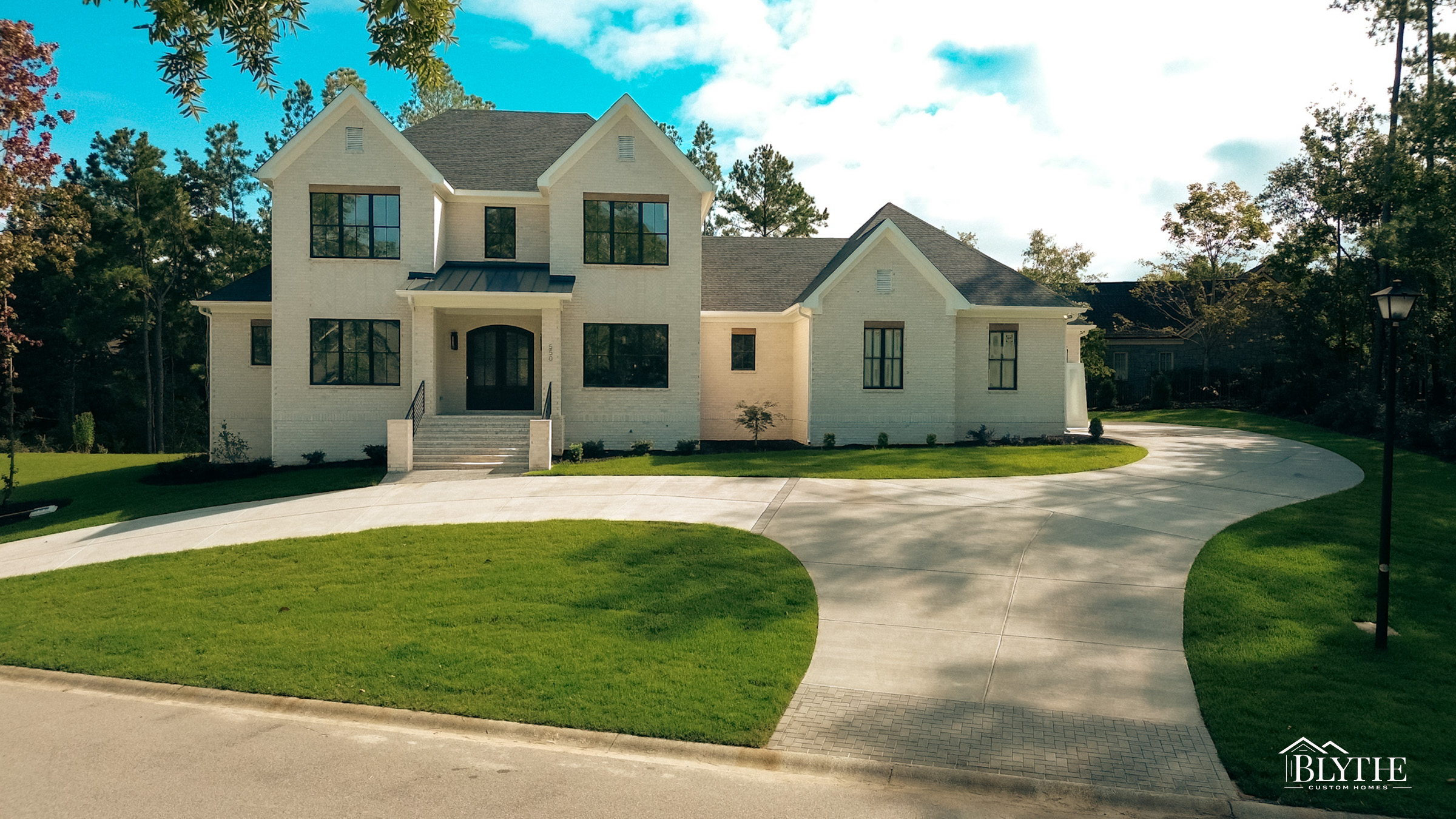
Financing is key to building a custom home in South Carolina. It’s also complicated and confusing for many, especially those building from the ground up for the first time. How you finance your custom-built house depends on your long-term plans, priorities, and current financial standing.
Most people finance custom builds with construction-only or construction-to-permanent loans, but some use their personal savings instead. To secure financing, you must finalize house plans and know the total cost of the build, which we can handle when planning your new custom home.
Go to our website for more information about Blythe Custom Homes and how we can help you plan and build your dream house in South Carolina.
To finance new custom-built homes in South Carolina, homeowners may get either construction-only loans or construction-to-permanent loans from trustworthy lenders.
A construction-only loan covers construction costs only, so you may have to get a traditional 20-, 25-, or 30-year mortgage once construction is over. Construction-only loans must be paid in full relatively quickly, often within 6 to 12 months of the beginning of the loan term. Supply chain problems, bad weather, and other timeline delays could put you at risk of not completing construction on time and being unable to pay off the loan.
Construction-only loans can be high-risk and often feature large balloon payments at the end of the loan term. They’re common among house flippers and developers, less so with builders constructing family homes.
A construction-to-permanent loan finances your new home build and then converts to a traditional mortgage once construction is complete. During construction, you can make interest-only payments. Once construction is complete and the house passes inspection, your payments will increase to include principal and interest, not just interest.
A construction-to-permanent loan is far less risky, and you have decades longer to pay it than you would a construction-only loan. Another perk of using a construction-to-permanent loan for your new build is that you only have to pay one set of closing costs, saving you money and time.
Some homeowners building a custom home will use a jumbo loan to finance the project. A jumbo loan exceeds the federal conforming loan limits, making it non-conforming, riskier, and harder to obtain. For more information about jumbo loans, read our specific blog post on this subject here. Jumbo loans typically help homeowners finance expensive, luxury homes, which Blythe Custom Homes often builds.
Homeowners can only get the loans they need to finance custom-built homes when they have the necessary financial qualifications required by lenders.
To secure financing from a conventional lender for a custom home build in South Carolina, you generally need a favorable credit score, preferably 680 or higher. If your credit score is too low to get approved by a traditional lender, you may be able to get a loan through the Federal Housing Administration.
You also need to be able to pay the down payment for the loan, whether it is a construction-only loan or a construction-to-permanent loan. The down payment may be between 20% and 25% of the total loan amount, which means most homeowners need some personal savings to get approved.
A lender will also evaluate your debt-to-income ratio to see if you are a good candidate for custom home financing. Most lenders cap debt-to-income ratios to between 43% and 45%. Some lenders might accept higher ratios in exchange for higher interest rates and other unfavorable terms, so keep that in mind if your debt-to-income ratio is 50% or above and you are approved for a construction-only or construction-to-permanent loan.
Financing a custom home begins with getting pre-qualified, so you know where to set the budget for the new build. This will also influence the house plans we create and that you submit to a lender to secure a loan.
To get a loan for your new home build, you must first get pre-qualified. Choose a lender you feel comfortable with, and confirm with them how much you can confidently borrow to fund construction on your new house without risking loan default.
In addition to the homeowner’s credit score, debt-to-income ratio, and other financial information, lenders weigh the building plans when approving construction-only and construction-to-permanent loans.
You must finalize house plans before a lender will approve a construction-only or construction-to-permanent loan application, and we can help you with all decisions as you plan your new house in South Carolina.
We can focus on refining the plans until you are completely pleased with them, at which point you can submit them to your lender for loan approval. Only viable construction plans will secure you financing for a custom-built home in South Carolina.
When you are approved for a construction loan to build a custom house in South Carolina, funds will be disbursed to your builder for each major phase of construction. After big jobs are done, like installing electrical and plumbing systems, inspections are conducted. If an inspection goes well, the next portion of funds will be disbursed for the next phase of construction, and so on. If your new home build fails an inspection, funds will be withheld until it passes.
Being responsible with fund disbursements is of the utmost importance, and you can rely on us to use the funds as intended to bring your custom home to life.
Choosing the right type of construction loan to finance your custom-built home can make all the difference in how you move through the building process and whether you need a mortgage loan after construction is complete.
While the ideal loan type varies by situation, construction-to-permanent loans are often the most convenient and cost-effective option for homeowners looking to put down roots in South Carolina for the long term.
Although a construction-only loan might be easier to get approved for, you may still need to get a traditional mortgage afterward. Construction-to-permanent loans make things considerably easier for homeowners, which is why they are more popular overall.
You can finance the construction of a pre-engineered home the same way you would a custom house: by obtaining a construction-only or construction-to-permanent loan. Pre-engineered homes can be built quickly, so a construction-only loan is less of a risk.
Some homeowners have the necessary savings to finance custom-built homes themselves, but does that mean they should, or should they still consider getting a loan?
You can finance a custom-built home with your personal savings. However, even if you have plenty saved up, it’s often a good financial decision to get a loan for a bit of cushion.
The thought of financing a custom-built home can be very overwhelming, especially for first-time homeowners. The more you know about construction loans and how they work, the more confident you can feel in whatever decision you make.
You can responsibly finance a custom-built home in South Carolina by taking your time planning the build with Blythe Custom Homes, avoiding loans with unfavorable terms, such as high interest rates and large balloon payments, and hiring builders who are committed to staying within the target budget you set.
Financing custom-built homes isn’t always easy, and homeowners sometimes face problems with large down payments, high interest rates, and failed inspections.
Securing financing for a custom build often requires homeowners to make a sizable down payment. If there’s currently no built structure in place, there’s also no asset to repossess if the borrower defaults. Because of this, the lender may require a larger down payment than if you were seeking a loan to renovate an existing home.
Construction-only loans may also have higher interest rates and require you to pay two sets of closing costs. High interest rates can cause homeowners to pay far more than the loan’s original principal over the loan term and increase the risk of default.
Homeowners who get construction-only loans may be surprised by the short-term structures of those loans. You may have to pay back the full amount of a construction-only loan within a year of signing it. Even if you expect residential construction to be done within a year, having such a strict deadline could lead to negative consequences if severe weather or supply-chain issues delay construction.
Once you finance a custom-built home with a construction-only loan or a construction-to-permanent loan from a lender, the loan amount doesn’t change. The agreed-upon amount is the agreed-upon amount, and you can’t get more from your lender if your project goes over budget. This makes careful planning with your builder even more important so that you can avoid budget overruns as much as possible.
When homeowners get loans to build their new homes, money is disbursed following milestone inspections. If progress doesn’t pass an inspection, no funds will be disbursed for the next stage of construction. Homeowners who get construction-only or construction-to-permanent loans rely on their lenders to disperse funds, putting them in a difficult position if there is an issue during inspections.
Rather than seeking a loan from a traditional lender independently, homeowners may secure financing from builders they trust to finance and build new custom homes in South Carolina.
We offer financing options to homeowners and encourage them to reach out to learn more about our qualification requirements and what builder-backed financing would look like.
Builders work with preferred lenders, streamlining the process for homeowners who need help financing their custom builds.
Visit us online to plan a custom-built home with Blythe Custom Homes in South Carolina.