Incorporating reclaimed wood into a brand-new home can inject tons of character into the build, making it feel homey from the get-go. Reclaimed wood is a great material, but using it comes with some challenges, and our builders can help you prepare for them all.
First, we’ll help you decide where to use reclaimed wood in a new build. Exposed beams, floating shelves, eye-catching doors, and even exterior siding are popular applications. We’ll then help you choose the right type of wood for the application, get the wood from a reliable source, inspect it to make sure it’s ready for use, and incorporate it into your home.
To get started planning a new custom home with our builders, you can contact Blythe Custom Homes through our website right away.
Reclaimed wood gives a home character like nothing else, and we can help you incorporate it into your new custom build.
The first step in incorporating reclaimed wood in a new custom build is deciding on the application. Do you want impressive exposed beams in the living and dining areas? Do you want to reuse reclaimed wooden flooring for a homier, traditional feel? Are you interested in using reclaimed wood for kitchen floating shelves or as an exterior accent? Or, do you need ideas and help from us in deciding on the application?
The way you plan to use reclaimed wood dictates the type of wood you should source. Barn wood can provide rustic accents in farmhouse-style new custom builds. Durable oak and maple work well for flooring, and thick Douglas fir offers the striking visual impact homeowners seek in beams and trusses.
Provenance documentation for reclaimed wood tells you where it came from, what it was used for, and that it is in good condition. Builders can request this documentation when sourcing reclaimed wood, so homeowners know the origin of the materials and can be confident in their quality.
Any reclaimed wood should be carefully inspected before it’s used in a custom build, especially if it has any structural importance. Our builders can check for evidence of pests, rot or decay, high moisture, excessing warping, and other indications that the wood isn’t safe or strong enough to use in the construction of your new build.
If you’re interested in incorporating reclaimed wood into your custom build, we can talk to you about some of the most popular applications and determine which align with your style preferences.
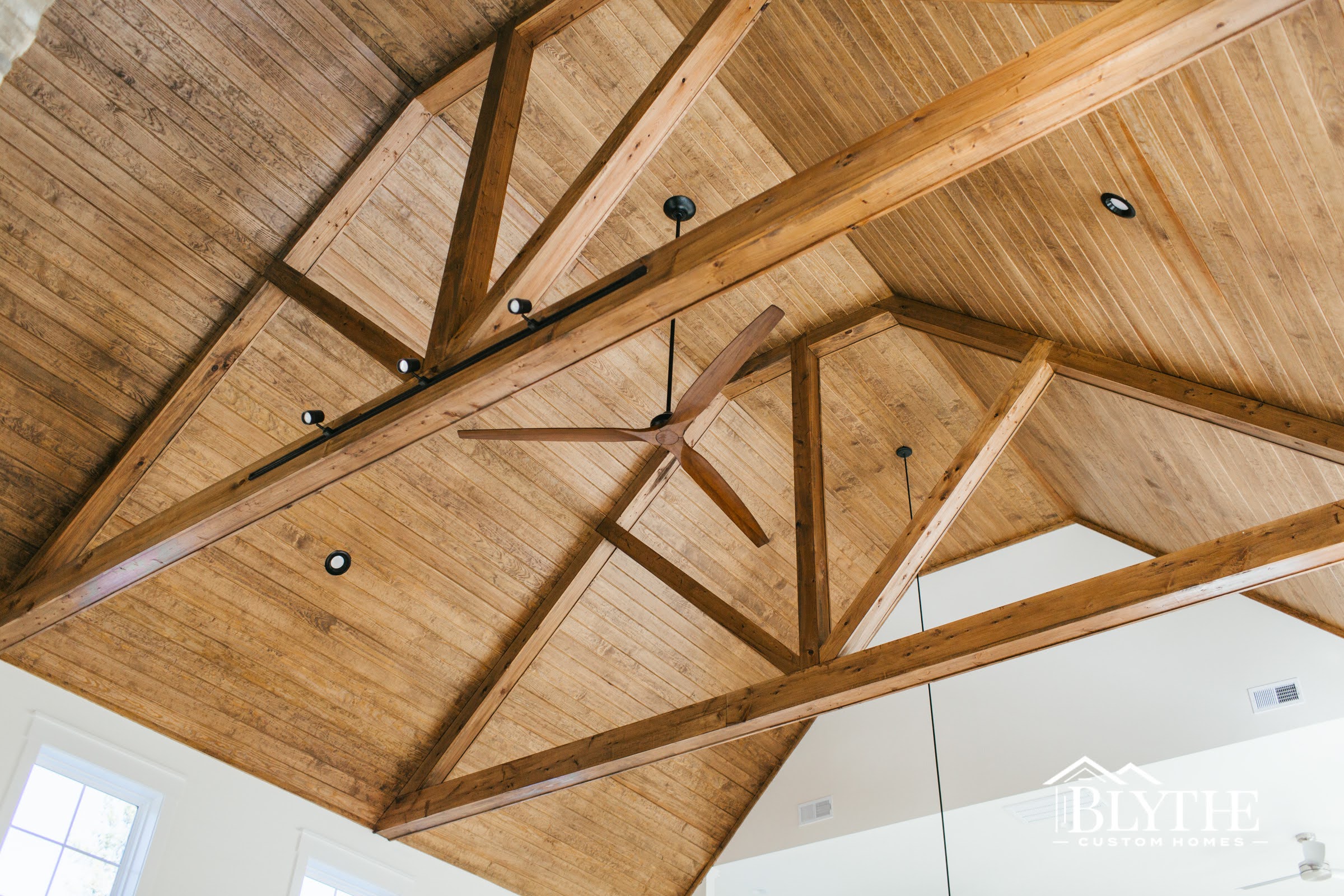
Exposed beams and trusses can make a newer home feel established and give it a sense of history. Exposed beams have a striking visual impact, drawing attention to high ceilings and the scale of large living areas and other rooms.
Reclaimed wood can be sustainable and durable, making it a good choice for flooring. We can help you choose the right flooring materials for your home to ensure they withstand your family’s foot traffic and are cohesive with the rest of the house’s design.
Use reclaimed wood for a feature wall, ceiling paneling, or other paneling in your new home. You can mix aged, mature wood with other materials throughout the house, making your home feel timeless and current.
Many homeowners want to use reclaimed wood for interior and exterior doors. Interior sliding barn doors are a popular design feature for large custom homes, creating interest and tying into the home’s overall interior aesthetic and functionality.
The character of reclaimed wood is what makes it beautiful, and homeowners may want to feature this material in their kitchens, where they spend so much time and entertain guests. Custom cabinetry, floating shelves, and custom window sills are just a few popular applications of reclaimed wood in kitchens.
Reclaimed wood can be a sustainable, durable option for exterior siding, provided it is in good condition and treated to protect against pests and weather.
Reclaimed wood is sustainable and adds a lot of character to a house, especially a brand-new custom build. When properly cared for, it is also incredibly durable, sometimes more durable than new timber.
Incorporating reclaimed wood may take up more of your budget, but it can also create a visual effect that new, freshly processed timber cannot.
You can incorporate reclaimed wood into a new build through flooring, accent walls, floating shelves, fireplace mantels, exposed beams, custom cabinetry, stairways, interior and exterior doors, window cases, and elsewhere throughout the house.
Our builders can handle sourcing reclaimed wood for a new custom build and ensure it meets our standards.
Reclaimed wood can be used for load-bearing walls, provided it is structurally sound and shows no signs of pest or rot damage. Reclaimed wood can be a good choice for load-bearing walls because of its strength.
Trust our experienced builders to source, inspect, and incorporate reclaimed wood into your custom build. Reclaimed wood is considered a luxury, expensive building material, and your contractor should carefully measure and handle it during construction.
To build with Blythe Custom Homes, reach out through our website.