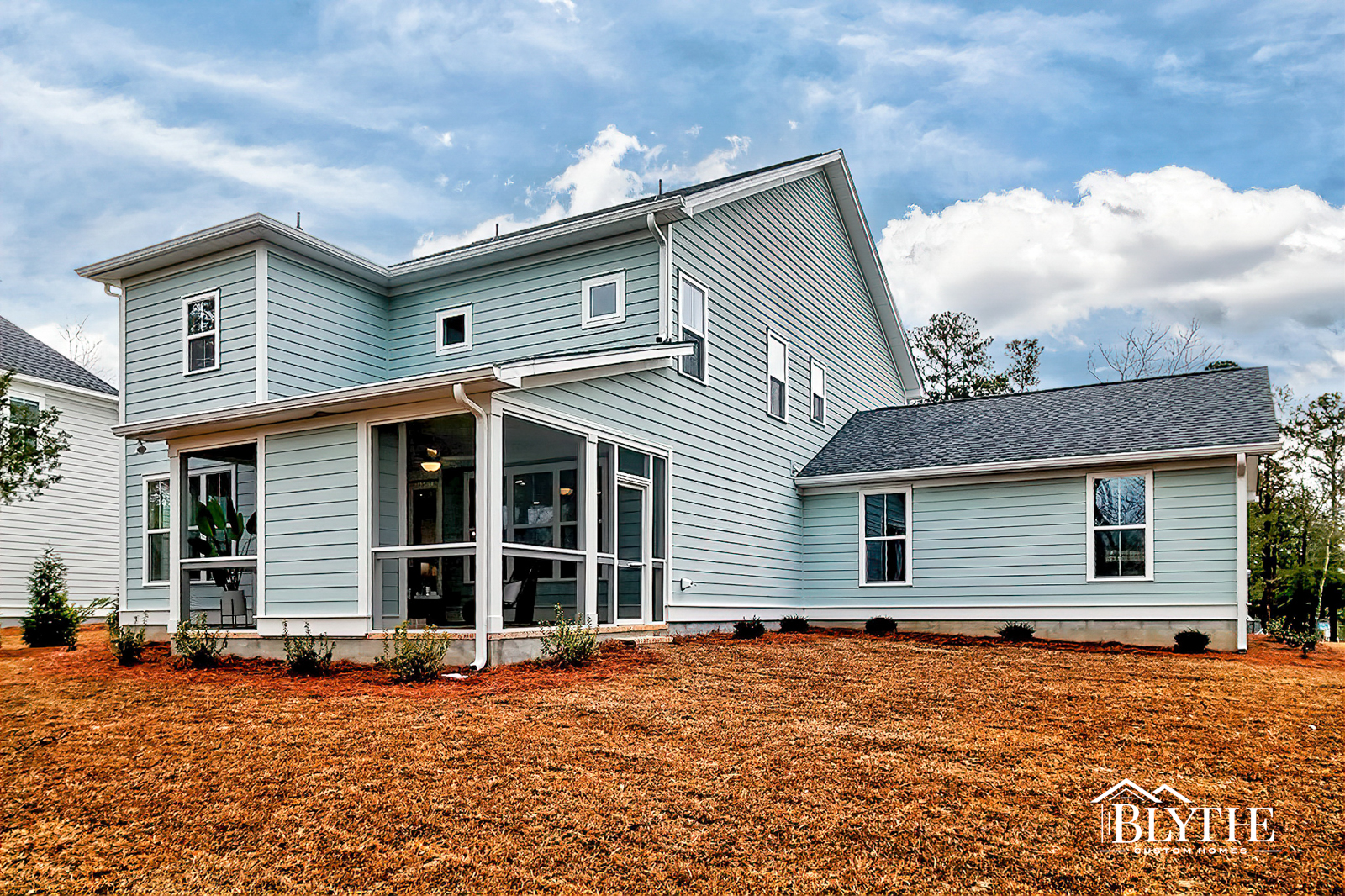
Many homeowners are concerned about minimizing their carbon footprint, not just for the environment’s sake, but to lower energy consumption and costs. Build an incredibly efficient home by constructing a “passive house” with our help in South Carolina.
Modern methods for passive house construction are well-suited for South Carolina’s warm, wet climate. High-level insulation throughout the entire house, airtight seals, high-efficiency windows and doors, and a superior ventilation system can keep your house at a comfortable temperature year-round, potentially saving you 90% on your home’s energy costs.
Blythe Custom Homes can help you plan and build a passive house in South Carolina when you reach out through our website.
Building a passive house not only has positive effects on the environment, but also on the homeowner’s wallet and bank account. These ultra-high-efficiency structures are worth learning more about, especially if you’re concerned about reducing the carbon footprint of your custom home.
A passive house is highly energy efficient, often reducing heating and cooling costs by 80% to 90%. We can achieve this through superior insulation installation, a tight building envelope between the interior and exterior of the house, and high-performance windows and doors to keep the house at a comfortable temperature.
Passive homes use energy-efficient ventilation, air purification, and heating and cooling systems to maintain a comfortable indoor temperature and ensure good indoor air quality throughout the sealed house.
Passive homes were originally designed for colder climates to prevent heat from escaping in the colder months, but they offer just as many benefits in warmer, wetter climates like South Carolina, and are a good choice for the eco-conscious almost anywhere.
You can build a passive house in South Carolina and save on heating and cooling costs, especially air conditioning in the summer. Managing moisture and humidity is an important concern in South Carolina’s climate, and passive house design features airtight seals that prevent mold or mildew from forming.
Airtight windows and doors, continuous insulation throughout the whole house, and energy-efficient HVAC systems make for successful passive homes in South Carolina. They can lower how much homeowners spend on air conditioning in the summer and heating in the winter.
Building a passive home has many practical benefits that you can see in your day-to-day life after moving into your new custom build in South Carolina.
Because passive homes are sealed so tightly, greater attention is paid to enhancing air quality during planning and construction. Airtight construction helps prevent mold and bacteria growth, especially in warm, humid climates like South Carolina.
Passive homes in humid climates generally need energy-efficient ventilation to improve indoor air quality, ensuring fresh air is cycled through your house regularly. This feature means passive homes often have better air quality than traditional homes.
Because the insulation in passive homes is so thick, the building envelope so tight, and the airtight seals so secure, you can maintain a consistent, comfortable indoor temperature, no matter how hot or cold it is outside. Do this without needing a massive air conditioning or heating system to keep your house at the right temperature.
Some owners of passive homes spend 90% less on heating and cooling costs year-round. In areas with more extreme climates, like South Carolina, where most of the year is warm and wet, meaning air conditioners are on, passive homes consume far less energy, which can be more affordable in the long run. The savings are so dramatic that building a passive home is an easy, smart decision, one that saves you money and substantially reduces your carbon footprint.
With their airtight seals, thick insulation, and energy-efficient systems, passive homes can have dramatically lower electricity or gas bills, sometimes up to 90%.
For homeowners building passive homes and including energy-efficient features in the design, there is a federal tax credit of up to $3,200 for qualifying high-efficiency windows, doors, and HVAC systems.
Continuous insulation, airtight construction, high-performance windows and doors, strategically orienting the home for shade, and energy recovery ventilators that circulate fresh air into the house are key aspects of passive home planning and construction.
Planning a passive home is more complicated than conventional construction, especially in South Carolina, where moisture and humidity are concerns year-round. Work with builders who know the principles of passive home construction and how to achieve a highly efficient home.
Building a passive home may entail higher upfront costs than traditional construction due to the high-efficiency materials used. Long-term energy savings may soon outweigh the higher upfront cost of building a passive home in South Carolina.
Construction on passive homes sometimes takes longer than conventional construction because of the increased attention devoted to sealing the house and sourcing high-efficiency windows, doors, and other materials, which sometimes experience supply chain issues.
Many homeowners decide that building a passive home in South Carolina is worth it, not just for long-term energy savings, but also for superior indoor air quality and consistent, comfortable temperatures.
For help planning and building a custom passive home in South Carolina, get in touch with Blythe Custom Homes through our website today.